You could reduce your reliance on glasses and contacts with LASIK in Sydney

LASIK reshapes the cornea with a precise laser so light can focus more clearly, which may reduce the need for glasses or contact lenses for many daily tasks

You could reduce your reliance on glasses and contacts with LASIK in Sydney

LASIK reshapes the cornea with a precise laser so light can focus more clearly, which may reduce the need for glasses or contact lenses for many daily tasks

Explore how LASIK may reduce the hassle of glasses and contacts

Many people seek LASIK to make daily vision feel simpler and more convenient

Day-to-day comfort

Contacts can feel drying, especially with long screen time or busy days. Glasses can fog, smudge, and get in the way at inconvenient times. If you are suitable, LASIK may reduce how often you need contacts or glasses for everyday tasks. That can mean fewer interruptions from cleaning, swapping, or dealing with lens discomfort. Healing takes time, and follow-up visits help monitor comfort, vision quality, and recovery.

Less daily frustration

Many people feel frustrated about always needing something on their face or in their eyes to see clearly. It can be tiring to plan life around glasses, contacts, and backups. If LASIK is suitable for you, some people find they think less about eyewear day to day and feel more at ease in routine moments. Decisions should be made after a full assessment, with clear discussion of benefits, limits, and risks for your eyes.

A smoother daily routine

A good day may start with less time spent on glasses or contact lens routines. It can mean getting ready with fewer steps, exercising or commuting with fewer interruptions, and moving through work without constant cleaning or swapping between options. If you are suitable, some people find day-to-day tasks feel simpler, especially with screens and being out and about. Your experience depends on your eyes, prescription, and visual needs.

More present in the moment

Before considering treatment, many people notice how often glasses or contacts interrupt normal life, like fog, smudges, dry eyes, or stopping to adjust what they need to see clearly. If you are suitable, reducing reliance on eyewear may help some people feel more present during conversations, work, and social time. What matters most is feeling comfortable and less distracted in everyday moments, with support through follow-up care.

Explore how LASIK may reduce the hassle of glasses and contacts

Many people seek LASIK to make daily vision feel simpler and more convenient

Day-to-day comfort

Contacts can feel drying, especially with long screen time or busy days. Glasses can fog, smudge, and get in the way at inconvenient times. If you are suitable, LASIK may reduce how often you need contacts or glasses for everyday tasks. That can mean fewer interruptions from cleaning, swapping, or dealing with lens discomfort. Healing takes time, and follow-up visits help monitor comfort, vision quality, and recovery.

Less daily frustration

Many people feel frustrated about always needing something on their face or in their eyes to see clearly. It can be tiring to plan life around glasses, contacts, and backups. If LASIK is suitable for you, some people find they think less about eyewear day to day and feel more at ease in routine moments. Decisions should be made after a full assessment, with clear discussion of benefits, limits, and risks for your eyes.

A smoother daily routine

A good day may start with less time spent on glasses or contact lens routines. It can mean getting ready with fewer steps, exercising or commuting with fewer interruptions, and moving through work without constant cleaning or swapping between options. If you are suitable, some people find day-to-day tasks feel simpler, especially with screens and being out and about. Your experience depends on your eyes, prescription, and visual needs.

More present in the moment

Before considering treatment, many people notice how often glasses or contacts interrupt normal life, like fog, smudges, dry eyes, or stopping to adjust what they need to see clearly. If you are suitable, reducing reliance on eyewear may help some people feel more present during conversations, work, and social time. What matters most is feeling comfortable and less distracted in everyday moments, with support through follow-up care.

3 simple steps to life with less dependence on glasses or contacts

Laser eye surgery can feel like a big decision. We make the process clear, supportive, and easy to follow

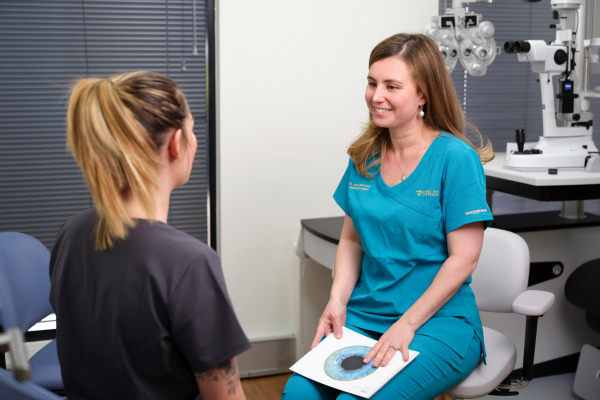
Step 1: Get in touch

Laser eye surgery isn’t for everyone. The first step is to get a clear answer on whether laser vision correction can help you or not. Book a free appointment online or call us

Step 2: We'll meet

At your appointment, we will discuss your lifestyle and answer your questions. If you are suitable, we will explain your options so you can make an informed choice.

Step 3: Enjoy more freedom

After treatment, many patients notice everyday tasks can feel easier with less reliance on glasses or contact lenses. Things like exercise, travel, work, and getting ready in the morning may feel simpler.

Find out if laser vision correction could reduce your need for glasses or contacts

Book a free appointment and our team will answer your questions, and explain which vision correction options may suit your eyes and lifestyle

Clear answers to common questions about LASIK in Sydney

Learn who LASIK may suit, how it works, what to expect, and the benefits and risks to consider before making a decision

The eligibility criteria for LASIK includes:

  • Stable Prescription: Candidates should have a stable vision prescription for at least one year.
  • Healthy Eyes: There must be no evidence of corneal ectasia (keratoconus) and there must be an absence of other eye diseases like glaucoma or infections. At Eagle Eye Surgeons we conduct a thorough screening assessment to identify any pre-existing eye conditions.
  • Adequate Corneal Thickness: A sufficient thickness of the cornea is crucial for procedures like LASIK.
  • Age: Candidates should be at least 18 years old for procedures like LASIK. This is because your vision and glasses need may not be stable until this time. After the age of 65 you are likely to develop lens changes or early cataract so lens based procedures are generally more appropriate than laser based surgery.
  • Pregnancy: People are not eligible for laser eye surgery whilst pregnant and within 3 months post-partum, as the hormonal changes can affect your cornea and script.

(Laser-Assisted In Situ Keratomileusis) is the most well-known and widely performed laser refractive surgery. It involves creating a thin flap on the cornea using a femtosecond laser, which is then lifted to allow the excimer laser to reshape the underlying corneal tissue. The flap is then repositioned, acting as a natural bandage during the healing process. LASIK is known for its quick recovery, minimal discomfort, and high success rates.

Here are some pros and cons to consider when evaluating LASIK as a potential option for your laser refractive surgery:

Potential pros1 https://www.michiganmedicine.org/health-lab/pros-and-cons-lasik-are-risks-worth-cost:

  • Quick recovery: Most people experience improved vision within 24 to 48 hours after LASIK, with minimal discomfort.
  • Versatility: LASIK can correct a wide range of refractive errors, including nearsightedness, farsightedness, and astigmatism.
  • High success rates: LASIK has a proven track record of safety and efficacy, with many patients achieving 20/20 vision or better.

Potential cons:

  • Flap-related complications: While rare, LASIK involves creating a corneal flap, which can sometimes lead to complications such as epithelial ingrowth, flap dislocation and rarely, infection.
  • Dry eye symptoms: Some individuals may experience temporary or even persistent dryness after LASIK which can take months to resolve, although advancements in technology and peri-operative treatment of dry eye have reduced this risk.
  • Corneal thickness limitation: LASIK requires a certain amount of corneal thickness to safely create a flap and perform the procedure, and individuals with thin corneas may not be suitable candidates for LASIK.

All procedures have risks. LASIK risks can include dry eye symptoms, glare or halos, fluctuating vision during healing, infection or inflammation, under-correction or over-correction, and reduced quality of vision in some conditions.

Flap-related issues are also possible because LASIK involves creating a corneal flap. In some cases, an enhancement procedure may be considered if suitable. Serious complications are uncommon but can occur, and your surgeon will discuss these during consent.

A thorough assessment helps reduce risk by identifying eye health issues early and planning carefully.

  • SMILE® Pro
    (Small Incision Lenticule Extraction) is a minimally invasive procedure that utilizes a femtosecond laser to create a thin disc-shaped lenticule within the cornea, which is then removed through a small incision. This technique preserves more of the corneal structure, leading to faster recovery times and reducing the risk of dry eye compared to other laser procedures. SMILE® Pro is suitable for individuals with higher degrees of nearsightedness, moderate farsightedness and up to 5D of astigmatism.
  • PRK
    (Photorefractive Keratectomy) is an older technique that predates LASIK but is still widely used today, especially when LASIK is not an option. With PRK, the thin outer layer of the cornea, known as the epithelium, is removed to allow direct reshaping of the underlying cornea with the excimer laser. The epithelium then regenerates naturally over time. While PRK has a longer recovery period compared to LASIK, it may be a better choice for individuals with thinner corneas or certain corneal irregularities such as epithelial basement membrane dystrophy.
  • ICL
    (Implantable Collamer Lens) is a lens-based vision correction option that can be used when laser procedures like LASIK are not suitable. With ICL, a thin, soft corrective lens is placed inside the eye, usually behind the iris and in front of your natural lens, to help focus light more clearly on the retina. Your natural lens is left in place, which is why it is sometimes called a “phakic” lens procedure. ICL may be considered for people with higher prescriptions, or when corneal thickness or shape makes laser treatment a less suitable choice. Like any procedure, suitability and risks are assessed in detail at your consultation.
  1. Initial Appointment– At your initial appointment our team will thoroughly examine your eyes and determine whether you are eligible for laser eye surgery. Your surgeon will discuss the results with you and tailor the best treatment option for you, depending on your eyes and what your requirements are.
  2. Day of Surgery- Preparation: On the day of surgery, our team will guide you through pre-operative preparations and informed consent, addressing any questions or concerns. You will be instructed to:
    1. Make sure contact lenses are not worn 5 days prior to surgery,
    2. That your face is devoid of any makeup or facial lotions,
    3. That you have a chaperone to take you home following your surgery,
    4. That you have taken Paracetamol or Ibuprofen 1-2 hours prior to the surgery and
    5. That you bring sunglasses to protect your eyes post surgery.
  3. Procedure: The laser eye surgery procedure is typically very quick and painless. It is performed using local anesthetic eye drops. No needles are used to numb the eye. In select cases, if needed, a low dose of sedative as an oral tablet may be given before the procedure. We do require your cooperation during the procedure to follow commands so you will need to be awake during the procedure to ensure optimal visual results. It takes a few minutes per eye, and both eyes are treated at the same time. Our experienced surgeons will ensure your comfort throughout the process.
  4. After the procedure- Recovery: This will vary between patients. As a general rule, immediate recovery is common, and patients can expect improved vision shortly after the surgery (usually 24-48 hours after SMILE® Pro and LASIK). For PRK, recovery is longer (usually 2-4 weeks).
    Post-Operative Care: Detailed post-operative care instructions will be provided, including the use of prescribed medications and follow-up appointments. To manage dry eyes we also recommend that patients use preservative free lubricating eye drops and Omega 3 supplements.
Laser eye surgery has a high success rate and the vast majority of people achieve significantly improved vision without complications. Most people can expect to be glasses free, although it cannot be absolutely guaranteed, particularly if you have a high refractive error. Laser enhancements or touchups are needed in around 1-5% of cases.

Still planning your day around glasses or contacts?

If that sounds like you, take the chance to explore whether vision correction could reduce your reliance on them


Always cleaning lenses?

Smudges, rain, dust, fingerprints, makeup, and screen glare can make glasses feel like a full-time job. It is frustrating when clear vision depends on a clean lens at the exact moment you need it. A free appointment is a simple first step to explore options that may make daily life feel easier and less interrupted.

Contacts by day, dry eyes by night?

Many people juggle contact lenses through work, gym sessions, long screen time, and late nights, then deal with dryness or discomfort later. It can feel like a constant trade-off between convenience and comfort. A free appointment can help you see whether there may be options that better fit your lifestyle.

Tired of glasses getting in the way?

From workouts and travel to beach days and nights out, glasses and contacts can add extra steps to simple moments. Packing solutions, carrying spares, and worrying about losing or breaking them gets old fast. Booking an appointment helps you explore what may be possible and what the next step could look like.

Proudly affiliated with respected professional organisations

We are proud to be members of recognised professional bodies that support high standards in eye care, training, and patient safety


Could laser eye surgery be right for you?

Take our free 2-minute self-test to explore which laser vision correction options may suit your prescription, eyes, and daily life

Get your questions answered about laser eye treatment in Sydney

Explore simple, expert-led blogs that explain your options, what to expect, and the everyday benefits people look for, so you can feel clear and confident about your next step

Academic resources on LASIK

Learn from peer-reviewed studies and respected clinical organisations about how LASIK works, who it may suit, and known risks, and note these links will take you off our website

In 2009, the FDA, NEI, and DoD launched the LASIK Quality of Life Collaboration Project (LQOLCP) to study potential risks from LASIK surgery. The project developed tools to track patient-reported outcomes (PROs) before and after surgery, including visual symptoms and their impact on daily activities. Results showed high satisfaction rates but noted minor visual symptoms post-surgery. Click here to read more.

Refractive surgery offers a range of procedures to reduce reliance on glasses or contact lenses by reshaping the cornea. From LASIK to SMILE, these treatments address conditions like nearsightedness, farsightedness, and astigmatism. Click here to read more.

A large study found that while both LASIK and contact lenses are very safe, the long-term risk of vision loss from contact lens–related infections may be slightly higher than the risk associated with LASIK surgery. Click here to read more.

Hi, I’m Dr. Erica Darian-Smith

I’m a FRANZCO ophthalmic surgeon focused on refractive surgery. I trained in Sydney at Prince of Wales Hospital, then completed a two-year corneal and refractive fellowship in Toronto, Canada. I also hold a Graduate Diploma in Cataract and Refractive Surgery and a Master of Medicine in Ophthalmic Sciences from the University of Sydney, and I lecture there as a Clinical Lecturer. I am a Fellow of the World College of Refractive Surgery and Vision Sciences and have a subspecialty interest in treating presbyopia.

I take time to listen, explain options clearly, and guide you through each step so you can make informed choices with confidence and calm. I am passionate about getting you your best visual outcomes.

Owner
FRANZCO, FWCRS, MMed, MBBS

Hi, I’m Dr. Mitch Lee

I’m a FRANZCO trained ophthalmic surgeon. My work covers refractive surgery, cataract surgery, complex anterior segment and lens surgery, and conditions of the retina and vitreous. I completed medical training at the University of Sydney and Royal Prince Alfred Hospital, then completed ophthalmology training in the Prince of Wales Hospital network. I am trained in refractive surgery and have completed the Forefront Refractive Surgery Course run by the highly respected London Vision Clinic. I have further fellowship level training in complex anterior segment surgery and vitreoretinal surgery.

In addition to my work with Eagle Eye Surgeons, I am the Head of Department for Ophthalmology at Nepean Hospital and have led the expansion of publicly funded eye surgery in the Nepean Blue Mountains Local Health District.

I focus on clear explanations, careful planning, and follow-up that keeps you supported at every stage, always.

Owner
FRANZCO, MMed(Critical Care), MBBS(Hons), BSc